
Coaching Keys to Developing Urban Leaders & Disciple-Makers
By S. Crawley
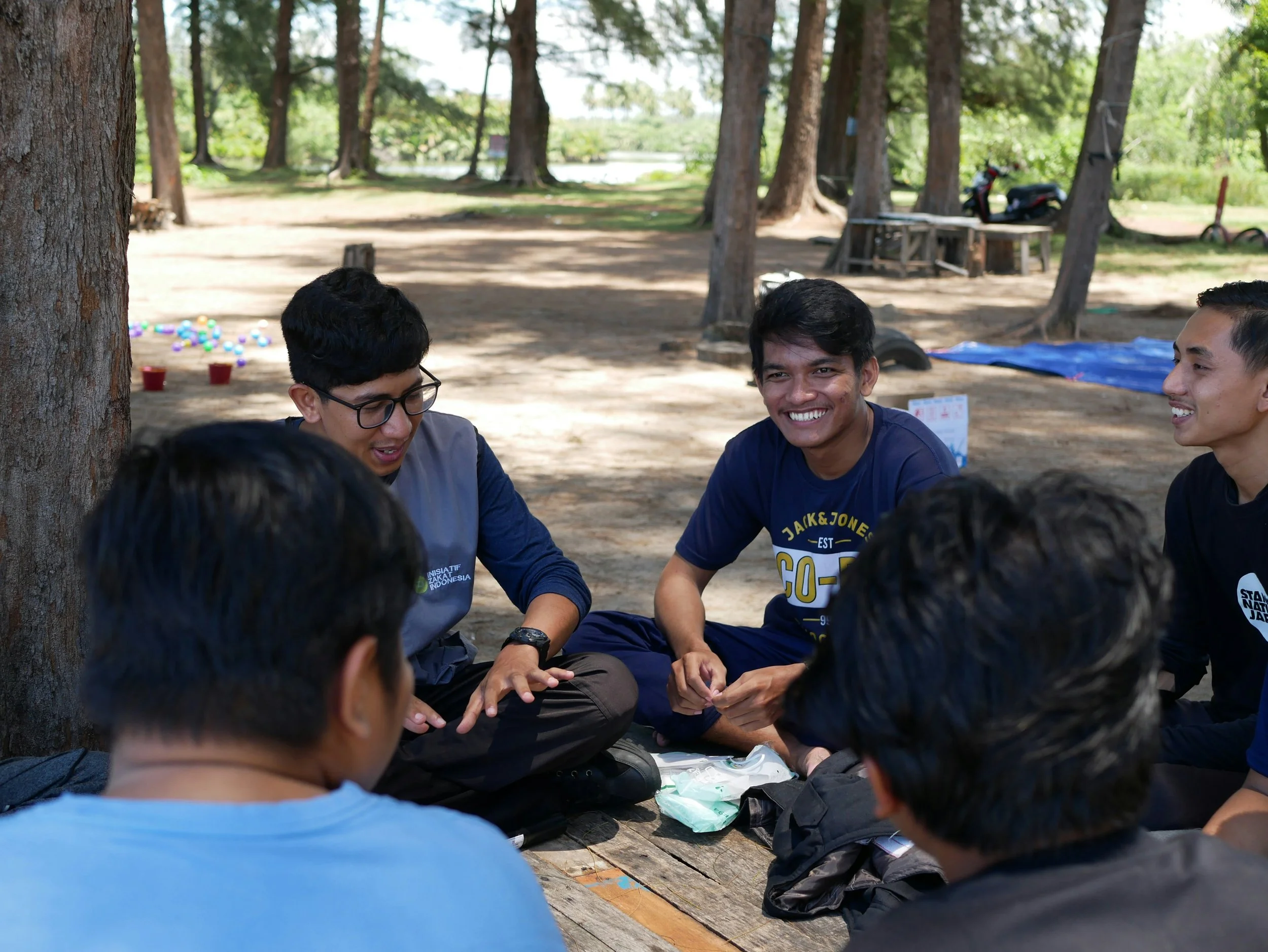
Photo by Alliance Football Club on Unsplash
In the last blog we talked about adopting a coaching posture to empower urban mission. In this article we’ll dive into some practical ways our team is learning to do this.
Coaching and Directing - What’s The Difference?
Leadership in urban environments is complex—with cultural diversity, relational fluidity, and a multitude of competing voices and distractions! Add to this the fact that in many, perhaps most, of the contexts we might find ourselves in a city, we are not natural members of the community - we will be “outside leaders”.
On the other hand, God has raised or is raising up “inside leaders” - sons and daughters of the soil. They have intimate knowledge of the culture, speak the language, navigate the relationships, and carry vision that's been shaped by years of experience and prayer in their communities.
In the complexity and diversity of cities, we have to go beyond a concept of leadership that depends on the expert coming in to identify the problem, provide the solution, and train people to implement it. Increasingly, effective outside leadership is coming alongside inside leaders and serving them as THEY lead toward the vision He's put on their hearts.
This is the difference between directing and coaching. Directing says, "Here's what you should do." Coaching says, "You are the expert on your context, and you are the one whom God has called to serve this community. I’m going to ask you questions and provide accountability that will help you keep moving forward.”
In the last blog, I talked about adopting a coaching posture to empower urban mission. In this article, we’ll dive into some practical ways our team is learning to do this.
Three Powerful Elements in Coaching Urban Leaders
As we serve teams across diverse Asian cities, we see three distinct forms of coaching that help leaders move forward:
1) ‘Pure’ Coaching
This looks like executive coaching or life coaching applied to ministry and mission contexts. At the core, it’s listening well and asking powerful questions that facilitate discovery (of self, of the situation, of possibilities, etc). We're not telling people what to do—we're asking questions that help them identify how God is leading them forward.
The process often starts with listening to the inside leader’s story. What has God put on their heart? What vision are they already carrying? What steps have they already taken? What challenges are they facing? Where do they feel stuck? Then we help them process these realities through questions that facilitate reflection - essentially helping them listen more carefully to their situation and the insights they already carry.
For example, the pressures of leadership and urgent needs can make it hard to see the big picture, but stepping back offers a broader view and often surfaces new insights.
Other times the big picture might be clear, but the complexity is paralysing. What is truly important? What is just a distraction? Coaching helps leaders get clarity amidst the noise.
Good coaching questions help to connect the dots between our heart, our context, and our next steps:
"What would it look like if God's vision for your city actually came to pass?"
"Where are you already seeing breakthrough or movement?"
"What would need to change for you to take the next step?"
"Who else shares a similar heart for this?"
"What's the most important thing to focus on right now?"
"What other resources or collaborators are available to you and your team?"
Good listening and powerful questions help teams and leaders deepen their awareness of their current reality, gain clarity on the opportunities and challenges in front of them, and identify their next steps.
2) Training
The second element is training, but we’re not talking purely about downloading information. When we say ‘training’, we’re talking about using targeted information to facilitate fresh conversation with the Word of God, the Spirit of God and each other.
In training, we do bring content and learnings from other contexts, but with humility because we can’t be certain of God’s specific plans and timing for these leaders in this context. What we can be certain of is that God wants to speak and guide, through His Word, by His Spirit and in the context of community.
For this, facilitating group discussion of Scripture and asking powerful questions (again) are crucial elements.
We all read the Bible, but we tend to read with certain questions in mind and focus on certain themes. Sometimes, changing the questions we’re asking can open up powerful new possibilities that were hidden in plain sight.
For example, most of us learned to read the Gospels asking, 'What did Jesus teach?' but when we ask, 'How did Jesus make disciples?' or 'How did Jesus start a movement?' we get new insights which we can apply in our contexts.
Another example is the Great Commission. Most of us are very familiar with this as a statement of what Jesus wants His disciples to do, but why? What is the end goal that the Father is working towards? Over and again, as teams soak in the Bible’s answers to that question and prayerfully imagine what it might look like in their harvest field, we see fresh vision and ideas released.
The trainer brings an awareness of powerful questions, frameworks and tools that have been helpful in other contexts, and an understanding of likely issues. The Holy Spirit brings a perfect understanding of the complexity of cities, His plans for each one, and what teams and leaders need right now.
Training is most powerful when it harnesses both those features and includes a process that creates space and relies on God to unlock fresh insights that are most relevant to participants’ contexts.
3) Peer Learning
The third element is perhaps most transformative over the longer term: creating spaces where leaders and teams can learn from each other’s experiences in their own living laboratories.
In recent years we have leaned into purposeful gatherings of teams from different cities. Nobody wants more conferences, but people are hungry to connect with fellow practitioners who are learning on the ground and tackling similar challenges. Contexts (and cultures and personalities) are different, but with a shared interest in good questions, insights and answers from one city or affinity can often spark helpful ideas for a completely different city or affinity.
Powerful insights emerge, leading to powerful learning in the moment and - more importantly - to relationships that continue long after the formal gatherings end.
Successful Coaching Multiplies Leadership
Here's the beautiful thing about a coaching posture: it multiplies leadership rather than centralising it.
When we direct, we create dependency on our expertise. When we coach—through powerful questions, Bible-centered discovery, and peer connections—we equip leaders to hear from God and move forward in their contexts with confidence. Because it is mainly about posture, it is also easily ‘caught’ and passed on. Those who experience the power of being coached find they can easily pass it on to those they are leading and serving.
This is especially crucial for those of us serving as outside leaders in an affinity or a city: we may bring experience and perspective, but the sons and daughters of the soil carry intimate knowledge of their communities and vision shaped by years of prayer and presence. The Holy Spirit is already at work in the hearts of disciple-makers across our cities. Our role is to create space for them to discern His leading, gain clarity on next steps, and connect with others on a similar journey.
If coaching is new to you, we've prepared a PDF resource with some of the most powerful coaching questions we've discovered over the years. Download it, try it out with some of the people you are serving, and see what God does!
Getting Practical
1) As you reflect on how you currently serve disciple-makers in your context, where do you find yourself defaulting to directing rather than coaching? How could you improve your contribution through incorporate a coaching posture?
2) Which of these three coaching elements—individual coaching, training with questions and Bible discovery, or peer learning facilitation—is most present in how you're developing disciple-makers and leaders? Which is most absent? What's one practical step you could take in the next month to strengthen the element that's missing?
3) Who are the disciple-makers and leaders in your city or affinity who are already carrying vision from God but might benefit from coaching conversations? How could you come alongside one of them this week?
Discipling the Urban Harvest provides practical insights and encouragement to walk with God in multiplying discipleship in an increasingly urban world - growing as children of the Father, serving the communities He has called us to, and discipling those hungry to know Him.